

How to Tell If a Candle Has Phthalates: 7 Checks
Table of Contents
- Why Phthalates Show Up in Scented Candles
- Why You Cannot Confirm Phthalates from the Scent Alone
- Reading the Label and Product Page for Fragrance Disclosure
- Phthalate-Free Candle Brands: What a Claim Does and Does Not Prove
- Asking Makers for Fragrance Oil Safety Data Sheets
- Paraben-Free, Phthalate-Free, and Beeswax Candles Compared
- Choosing Your Next Candle with Confidence at Zebra & Co.
- Frequently Asked Questions
How to Tell If a Candle Has Phthalates: 7 Checks
Last Updated: November 7, 2026
Why Phthalates Show Up in Scented Candles
Many people light a candle for the scent and never think about what the fragrance is made of. Synthetic fragrance is the part to watch. According to 2023 study on scented candle exposure and respiratory symptoms, synthetic fragrances used in candles usually contain phthalates, and phthalates can be released into the air as a candle burns.
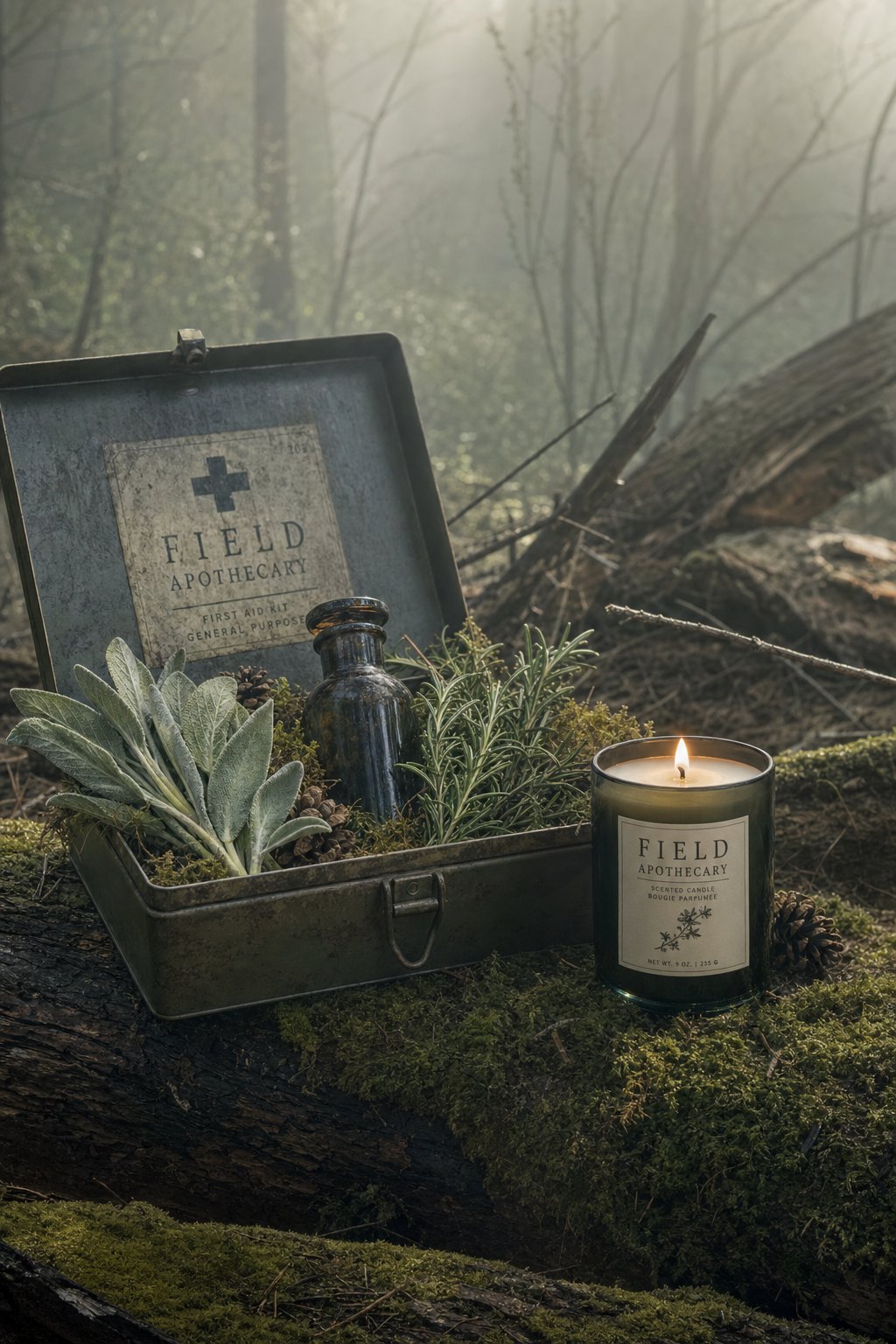
So why are they used at all? Phthalates help fragrance oils hold their scent and spread evenly. Manufacturers often add them to make a candle smell stronger and last longer. That is the trade-off you need to know about.
Here is the short version:
- Phthalates are common in synthetic fragrance blends.
- They can be released into indoor air while a candle burns.
- A strong scent does not tell you whether they are present.
Keep these points in mind as you work through the checks below.
Why You Cannot Confirm Phthalates from the Scent Alone
You cannot smell phthalates. They have no odor you can detect. A candle that smells rich and clean could still contain them, and an unscented candle could contain them too.
Fragrance formulas are also usually kept secret. Companies treat their scent blends as proprietary. That means the candle may list "fragrance" or "parfum" on the label without naming the chemicals inside. Some fragrance formulas are secret for good reason, but the result is that the label often does not answer your question.
Use these habits instead of relying on your nose:
- Read the label, not just the scent name.
- Look for a clear statement about the fragrance, not just a pretty description.
- Treat "natural" or "clean" as words to check, not proof.
Reading the Label and Product Page for Fragrance Disclosure
Start with the product label, then the product page. Most shoppers only check one of them.
Look for these things on the label:
- The fragrance type, such as "fragrance oil" or "essential oil blend"
- Any statement about phthalates or the fragrance formula
- The wax type and any additives listed
Then check the product page for more detail. Good sellers explain what goes into the candle. Vague pages that only describe the smell are a warning sign.
Watch out: A label that says "fragrance" alone is not the same as a disclosed fragrance formula. Do not assume the candle is safe because a word like "natural" appears on the box.
Phthalate-Free Candle Brands: What a Claim Does and Does Not Prove
Some candle makers advertise their products as phthalate-free. This is useful information, but read the claim carefully. A phthalate-free claim tells you the maker says it avoided those chemicals. It does not tell you how the claim was tested, which fragrance oils were used, or whether every batch matches.
A "phthalate-free" statement on a candle label is generally a marketing claim rather than a formally defined term. That does not make it false, many makers do use fragrance oils formulated without added phthalates, but it means the claim is only as strong as the documentation behind it.
When you see the claim, ask yourself:
- Does the brand say which fragrance oils or fragrance suppliers it uses?
- Does it explain how it confirms the claim, for example, a supplier declaration or a certificate of analysis?
- Does the claim cover the whole product line, or just one candle?
- Does the brand distinguish "no added phthalates" from "tested and confirmed free of phthalates"? These are different statements.
A clear, specific claim is more helpful than a broad one. A brand that explains its fragrance choices usually gives you better evidence than one that only uses the words "phthalate-free" on the packaging.
If you want stronger evidence than a label claim, ask the maker for a written statement from the fragrance supplier confirming that the oil contains no phthalates, or a certificate of analysis for the fragrance batch. A supplier declaration can be a reasonable middle ground when independent testing is not available.
Watch out: a "phthalate-free" claim on the fragrance oil does not automatically mean the finished candle is phthalate-free if the maker blends oils or uses multiple suppliers. Ask whether the claim applies to every fragrance component in the candle you are buying.
Asking Makers for Fragrance Oil Safety Data Sheets
If a label or product page leaves you unsure, contact the maker and ask for documentation. The most useful document to request is the fragrance oil's safety data sheet, usually called an SDS (sometimes MSDS).
A safety data sheet is a standardized document that accompanies a chemical product. A safety data sheet is a workplace hazard document that accompanies many chemical products. Its sections cover hazard identification, ingredient information, physical properties and toxicological data, and the ones most relevant to a candle shopper are:
- Section 2, Hazard identification: the classification of the substance or mixture and the relevant hazard statements.
- Section 3, Composition/information on ingredients: the chemical identity and concentration ranges of ingredients that are classified as hazardous.
- Section 9, Physical and chemical properties: appearance, odor, flash point, and similar data.
- Section 11, Toxicological information: available data on health effects.
Here is the limit you need to understand: Section 3 is not a full ingredient list. It is required to disclose only ingredients that meet hazard-classification thresholds. A fragrance blend can contain dozens of components, and the SDS may name only a handful, or none, if the blend is not classified as hazardous. A fragrance oil can therefore have a clean-looking SDS and still contain phthalates that fall below the disclosure threshold. The absence of a phthalate on an SDS is not proof of absence in the candle.
What an SDS can do is help you ask better follow-up questions. If Section 3 lists a phthalate such as diethyl phthalate (DEP) or di(2-ethylhexyl) phthalate (DEHP), you have a concrete answer. If it lists nothing, ask the maker directly whether the fragrance oil contains any phthalate and whether they have written confirmation from the fragrance supplier.
Here is a simple script you can send:
Hello, I'm considering your candle in [name]. Could you please send the safety data sheet for the fragrance oil used? I'd also like to know whether the fragrance contains any phthalates, and whether you can share written confirmation from your fragrance supplier.
A helpful maker will answer clearly and may share the fragrance supplier's documentation. A maker that dodges the question, or sends only a finished-candle SDS that lists no fragrance components, is giving you useful information too.
Watch out: an SDS is a workplace hazard document, not a consumer ingredient disclosure. Treat it as one piece of evidence, not a verdict.
Paraben-Free, Phthalate-Free, and Beeswax Candles Compared
Many shoppers see several terms on candle packaging. Here is how they differ:
| Term | What it tells you | What to check |
|---|---|---|
| Phthalate-free | Maker says phthalates were not used | Ask which fragrance oils were used |
| Paraben-free | Maker avoided parabens | Check the full ingredient list |
| Beeswax candle | Made with beeswax as the main wax | Fragrance may still contain phthalates |
| Soy or other vegetable wax | Made with plant-based wax | Fragrance may still contain phthalates |
The wax type and the fragrance are two different questions. A beeswax candle can still use a synthetic fragrance oil, so check both.
Here is a quick way to think about it:
- Wax affects how the candle burns.
- Fragrance affects what goes into the air.
- Claims are only as good as the documentation behind them.
Choosing Your Next Candle with Confidence at Zebra & Co.
Zebra & Co. is a curated luxury marketplace for hand-poured candles, rare mineral specimens, and vintage décor. When you shop for a candle, use the checks in this guide: read the label, look for clear fragrance disclosure, and ask for documentation when a claim is vague.
Our EnZebra® candles are a good place to start if you want a sculptural piece for your home. The Rose Pillar Candle - Large / Pink is a sculptural pillar candle for bedrooms, living rooms, or spa-inspired settings, and the EnZebra® Geometric Swirl Pillar Candle in Lavender is hand-poured with a soft, herbal lavender fragrance. Check each product page for the details you need before you buy.

If you want to compare wax types before you shop, read our guide on soy wax vs beeswax candles. A reader who has just bought a candle can also learn how to trim a candle wick properly at home for a cleaner, safer burn.
Shop All at Zebra & Co. and take the guesswork out of choosing your next candle.
Frequently Asked Questions
Do candles have phthalates in them?
Some scented candles can contain phthalates, usually within synthetic fragrance oils. Phthalates in candle fragrances can be released as candles burn. A scent or a generic 'fragrance' or 'parfum' label does not establish whether phthalates are present, so the most reliable approach is to check for an explicit phthalate-free statement and ask the maker for supporting documentation about the fragrance oil.
Does a candle labeled phthalate-free guarantee it contains no phthalates?
A clear phthalate-free claim is a useful signal, but it is not independent proof on its own. The supplied research says fragrance formulas are often proprietary and that phthalates may not be named on a standard candle label. To strengthen the claim, look for a brand that discloses its fragrance supplier and can provide a Safety Data Sheet for the fragrance oil. Treat the label as the starting point of your check, not the end of it.
What should you ask a candle maker about fragrance ingredients?
Ask whether the fragrance oil is phthalate-free and request the supplier's Safety Data Sheet for that specific oil. Ask which wax and wick the candle uses and whether the brand discloses its fragrance supplier. If the maker cannot or will not answer these questions, that is useful information in itself. Keep the questions specific, since general reassurance about being 'clean' or 'natural' does not address fragrance composition.
Are beeswax candles free of phthalates?
Beeswax is a natural wax, but a beeswax candle can still be scented with a synthetic fragrance oil. Whether it contains phthalates depends on the fragrance, not the wax alone. Check whether an unscented beeswax candle is offered, or whether the scent is disclosed and documented as phthalate-free. Zebra & Co. offers EnZebra Rose and Lavender pillar candles that you can review on their product pages.
