

Are Story-Driven Home Decor Pieces Worth the Investment?
Last Updated: November 4, 2026
Quick Summary
Story driven decor is worth the investment when the piece has a traceable origin, a named maker, and honestly described materials. Documentation and physical evidence such as maker's marks, genuine wear, and original joinery separate real heirlooms from decorative imitations. Buyers get the most value by anchoring a room with one well-documented statement piece.
- Ask sellers for specific provenance, such as who owned the piece and what supports its date.
- Check maker's marks, wear patterns, and original hardware or joinery before buying a vintage piece.
- Estate sales, tag sales, and local auction houses are where most authentic narrative pieces surface.
- Adopt the hero-piece model by concentrating your budget on one or two anchor pieces a year.
- Keep receipts, provenance notes, and condition photographs together to protect the piece's value.
Table of Contents
- What Makes a Home Decor Piece Story Driven
- How to Tell the Story Behind a Vintage Piece
- Mixing Vintage Finds With Modern Luxury Home Decor
- Curating Statement Pieces: From Mineral Specimens to Sculpture
- Evaluating Luxury Home Decor Brands and High-End Home Decor Websites
- Budgeting for Narrative Design and Maintaining Heirloom Pieces
- Start Building Your Own Collection of Meaningful Pieces
- Frequently Asked Questions
Story driven decor is having a moment, and many shoppers are asking whether the premium price is worth paying. The short answer is yes, but only when you know what you are buying. At Zebra & Co., we curate luxury home goods, vintage décor, and rare mineral specimens. This guide explains what separates a piece with a real story from one that just looks expensive. Below, we walk through how to judge provenance, how to pick statement pieces, and how to plan a budget that lasts. The worldwide home decor market is projected to reach USD 126.84 billion in 2026 (Statista worldwide home décor market forecast), so plenty of buyers are shopping for pieces that carry meaning rather than trend.
What Makes a Home Decor Piece Story Driven
A story-driven piece is an object with a traceable origin, a clear maker, and a reason it was made. It is more than a pretty surface. Designers are moving away from mass-market trends toward curated pieces that reflect personal history. Homeowners now prioritize story driven decor that tells a personal story. (Woodgrain's 2026 interior trends report)
- The maker or source is named or documented
- The materials are real and described honestly
- The piece has a history, whether vintage or newly handmade
- It fits a personal theme rather than a passing trend
How to Tell the Story Behind a Vintage Piece
Vintage pieces carry the most history, but they also carry the most doubt. For background on the styles themselves, see American heritage pieces curator's guide. The difference between a genuine heirloom and a decorative imitation usually comes down to documentation and physical evidence, and both are things you can learn to read before you spend money.
Start with the paper trail. A credible seller can tell you where a piece came from, who made it, and what supports the date. Ask for the chain of ownership in plain terms: Was it purchased from the original family? Did it come through an estate sale? Is there a receipt, an auction catalog page, or a photograph of the piece in its previous home? Provenance does not have to be glamorous to be real, but it should be specific. "Old family piece" is not provenance. "Bought at a 2019 estate sale in a house built in 1928, with the original hardware and a maker's stamp on the underside" is.
Then read the object itself. Collectors typically look for four things:
- Maker's marks and signatures. These can be stamped, incised, branded, or applied as a paper label. Look underneath, inside drawers, on the back, and along the bottom edge. A mark that matches a known maker and period is strong evidence; a mark that looks freshly stamped or sits on top of the finish is a warning sign.
- Wear patterns that match age and use. Genuine age shows in predictable places: drawer runners, chair arms, the base of a lamp, the underside of a stone slab. Wear should be uneven and logical. Uniform distressing applied at a factory tends to look mechanical.
- Original hardware and joinery. Dovetails, mortise-and-tenon joints, hand-forged nails, and slot-head screws all point to older construction. Phillips-head screws, particle board, and machine-perfect joints point to modern production.
- Materials described honestly. Solid wood versus veneer, hand-blown versus molded glass, natural stone versus resin cast. Ask the seller to name the material and explain how they verified it.
Watch out: a piece that looks old is not always old, and a seller who cannot answer basic questions about origin, materials, or date is telling you something important by omission.
Sourcing matters as much as inspection. Estate sales, tag sales, and local auction houses are where most authentic narrative pieces surface, because those channels move objects directly out of homes with real histories. Online marketplaces are the hardest channel, because photographs hide wear and stories are easy to embellish.
Mixing Vintage Finds With Modern Luxury Home Decor
Pairing vintage and modern pieces is one of the easiest ways to create a room with depth. Start with one anchor vintage piece, then add modern pieces in a similar color range. Balance heavy textures with clean, simple shapes. This keeps the room from feeling like a museum or a showroom.
Shoppers looking at luxury home decor brands often find that mixing sources works better than buying one collection. A single well-chosen vintage piece can make a new sofa feel collected rather than catalog-fresh.
Curating Statement Pieces: From Mineral Specimens to Sculpture
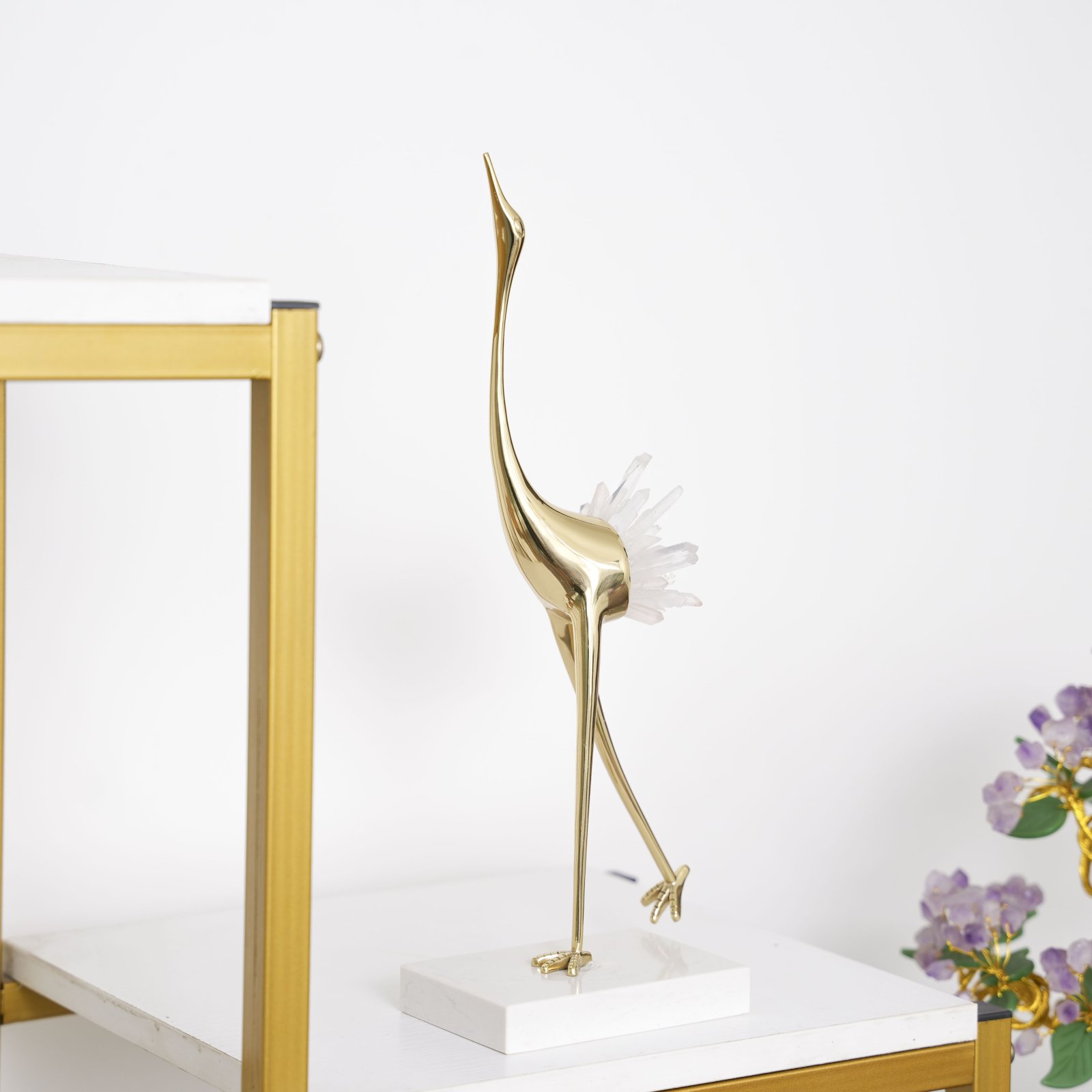
A statement piece should be the focal point of a room, not one of many objects competing for attention. Mineral specimens and sculptural stone work especially well because each one is unique. The Mexican Crazy Lace Agate statement sculpture, for example, is a one-of-a-kind freeform piece with intricate natural banding.
Look for pieces with a warm neutral palette if you want something that works in a range of rooms. Place a heavy stone piece on a console or shelf where it can be seen from the entry. Avoid crowding it with other objects.
A Masterwork in Stone — Handcarved Jade Sculpture →
Wondering whether mineral pieces hold value over time? We explain that in our guide on whether rare mineral specimens are investment grade. If you are ready to start buying, our collector's guide to rare mineral specimens walks through what to look for.
Evaluating Luxury Home Decor Brands and High-End Home Decor Websites
Not every luxury label delivers the same value. For a direct side-by-side look at artisan and luxury options, see AERIN vs modern artisan home decor compared. When comparing brands or websites, check for clear sourcing details, honest product descriptions, and a return policy you can read in full.
Ask the business these questions before you buy:
- Can you trace who made this piece?
- Are the materials described accurately?
- What happens if the piece arrives damaged?
- Do the photos match the item I receive?
Budgeting for Narrative Design and Maintaining Heirloom Pieces
Story-driven decor is an investment, so plan the budget before you shop. The practical approach most collectors settle into is the hero-piece model: rather than spreading a fixed budget across many mid-tier objects, concentrate it on one or two pieces a year that anchor a room and hold their value. A single well-documented statement piece tends to do more for a space, and for resale value, than a roomful of mass-market accents bought at the same total cost.
A workable annual framework looks like this:
- Set a yearly number first. Decide what you can spend on decor across twelve months without touching emergency savings or carrying a balance. That number is your ceiling, not your target.
- Reserve the majority for one hero piece. Many collectors allocate roughly half to two-thirds of the annual budget to a single anchor object, whether that is a mineral specimen, a sculpture, or a documented vintage piece.
- Keep a smaller slice for supporting pieces. Textiles, lighting, and small accents complete a room, but they should not crowd out the anchor purchase.
- Hold a maintenance reserve. Set aside a modest amount each year for cleaning supplies, professional conservation if needed, and insurance riders on high-value pieces.
- Buy in the off-season when you can. Auction calendars and estate-sale cycles create predictable lulls; patience often beats urgency on price.
Watch out: the most common budgeting mistake is buying the supporting pieces first and then discovering the anchor piece is out of reach for the year, which leaves a room that feels decorated but not collected.
Maintenance is the other half of protecting value. Different materials need different care, and treating them all the same is how heirlooms get damaged.
- Stone and mineral specimens. Dust with a soft, dry cloth or a soft brush. Avoid acidic or abrasive cleaners, which can etch polished faces. Keep pieces out of direct sun, since prolonged UV exposure can fade or alter some minerals. Handle large slabs with two hands and set them on stable surfaces; a chip on a freeform edge is difficult to reverse.
- Wood. Dust regularly with a microfiber cloth. Use a mild, pH-neutral wood soap sparingly and dry immediately. Keep wood away from radiators, heating vents, and direct sun, because fluctuating humidity causes cracking and warping. A stable indoor humidity level does more for wood than any polish.
- Metal hardware and fixtures. Keep metal dry and wipe away fingerprints rather than letting them sit. Avoid abrasive pads on plated or patinated finishes. If a piece has an intentional patina, do not polish it away; that finish is part of the object's story and value.
- Textiles and upholstery. Vacuum gently with a brush attachment, rotate cushions, and keep pieces out of direct sun. Store seasonal textiles clean and folded, never in damp basements or hot attics.
- Documentation. Keep receipts, provenance notes, and condition photographs together. If you ever sell, insure, or pass a piece on, that file is what turns an object back into a story.
Good maintenance keeps a piece looking the way it did when you bought it, and that is part of the story too.
Start Building Your Own Collection of Meaningful Pieces
Start small. Choose one piece that means something to you, whether it is a stone from a favorite place or a vintage object tied to your family. Add one new piece each season and let the room grow with you. At Zebra & Co., you can browse our Jade Sculpture by Garland Workshop & Lapidary for $350.00, or shop our 9.6 lb Sodalite Statement Slab for $248.00. Our EnZebra Stallion Sculptural Candle is $48.00.


Frequently Asked Questions
Where do people buy luxury home decor?
Luxury home decor is sold through established high-end retailers, design showrooms, artisan studios, and curated online marketplaces. Pieces with a documented origin, such as handcarved stone sculptures or vintage objects with traceable provenance, tend to come from specialist sellers who describe each item's making, materials and history. Buyers should look for clear photos, stated dimensions and weight, and a return policy before purchasing, especially for rare or heavy items.
How can you tell the story behind a vintage decor piece?
Start with the maker's marks, materials, construction methods and any labels or stamps. Ask the seller for documented provenance, such as prior ownership records, an era attribution, or notes from the sourcing process. A credible seller will explain what is known and what is estimated. Be cautious of claims that cannot be supported, and treat the story as a verified fact only when records or physical evidence back it up.
What makes a home decor piece heirloom quality?
Heirloom quality usually comes from solid materials such as natural stone, hand-finished wood or metal, and construction that is repairable rather than glued together. Timeless forms and finishes age well, and the piece keeps its value when the trend passes. Look for detailed craftsmanship, honest material descriptions and simple care needs. Pieces made to be handled, displayed and passed down tend to earn the heirloom label.
How do you mix vintage decor with modern interiors?
Anchor the room with one or two vintage statement pieces and let clean-lined modern furniture carry the rest. Repeat a color or material across the room so the older pieces feel intentional rather than accidental. A sculptural stone or carved object on a modern console creates contrast without clutter. Edit ruthlessly: fewer, better pieces give a collected look that feels curated.
